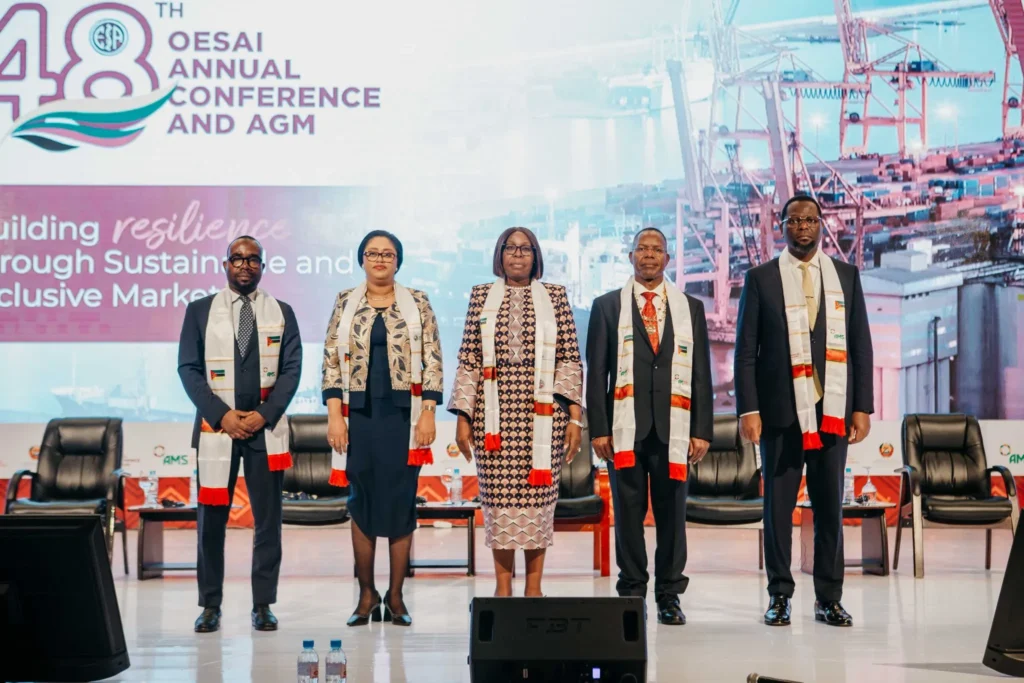
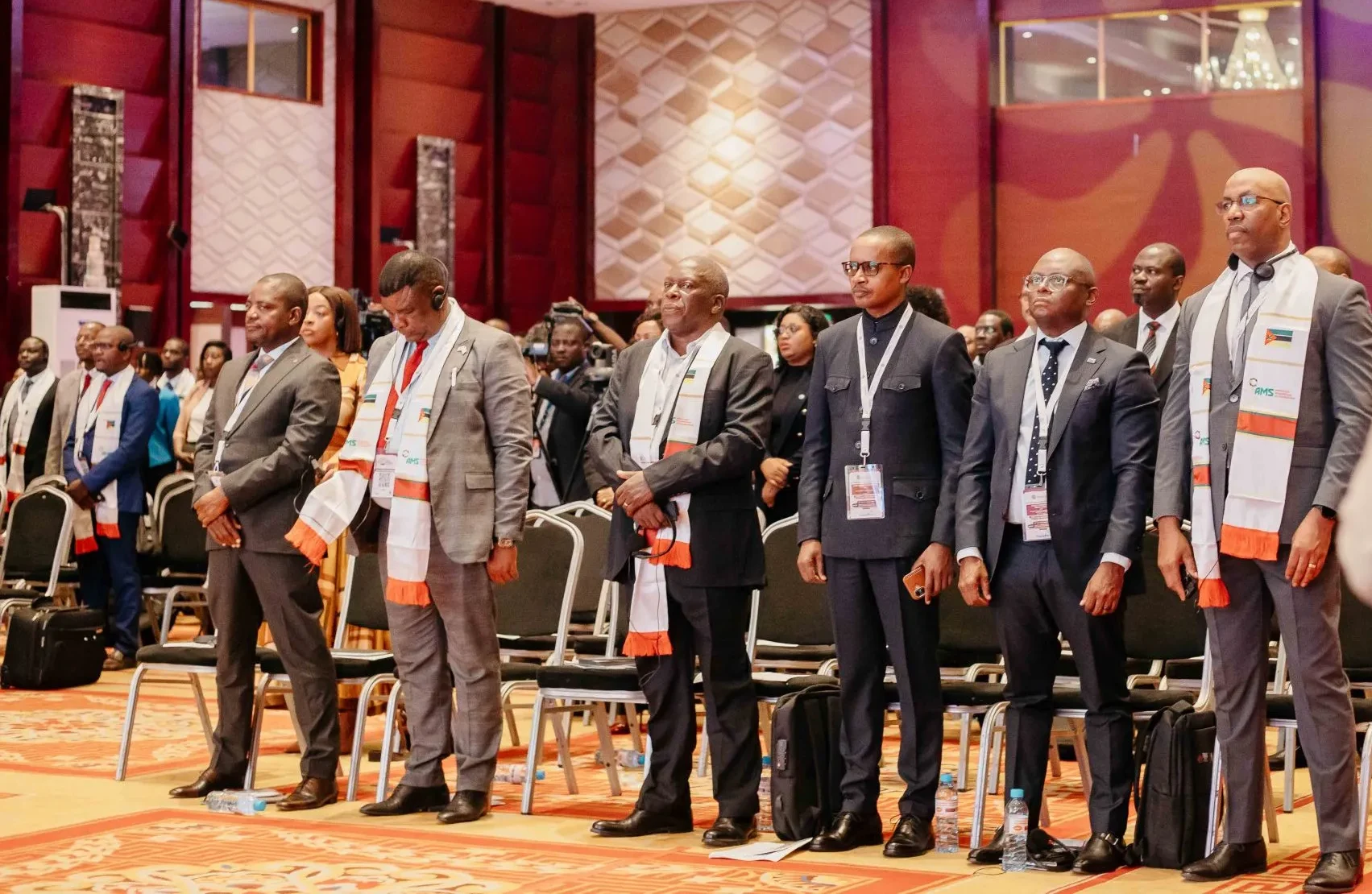
MAPUTO, Mozambique, 18 August 2026 — Maputo has become the meeting point for some of Africa’s leading insurance, reinsurance, broking and risk professionals as the 48th Annual Conference and AGM of the Organisation of Eastern and Southern Africa Insurers (OESAI) brings the regional industry together around one central question: how can African insurance markets become more resilient, sustainable and inclusive?
Running from 16 to 20 August 2026 at the Joaquim Chissano International Conference Centre, the conference is being held under the theme “Building Resilience through Sustainable and Inclusive Markets.”
The gathering has drawn senior executives, underwriters, brokers, regulators, actuaries and other specialists from across Eastern and Southern Africa, alongside international market participants.
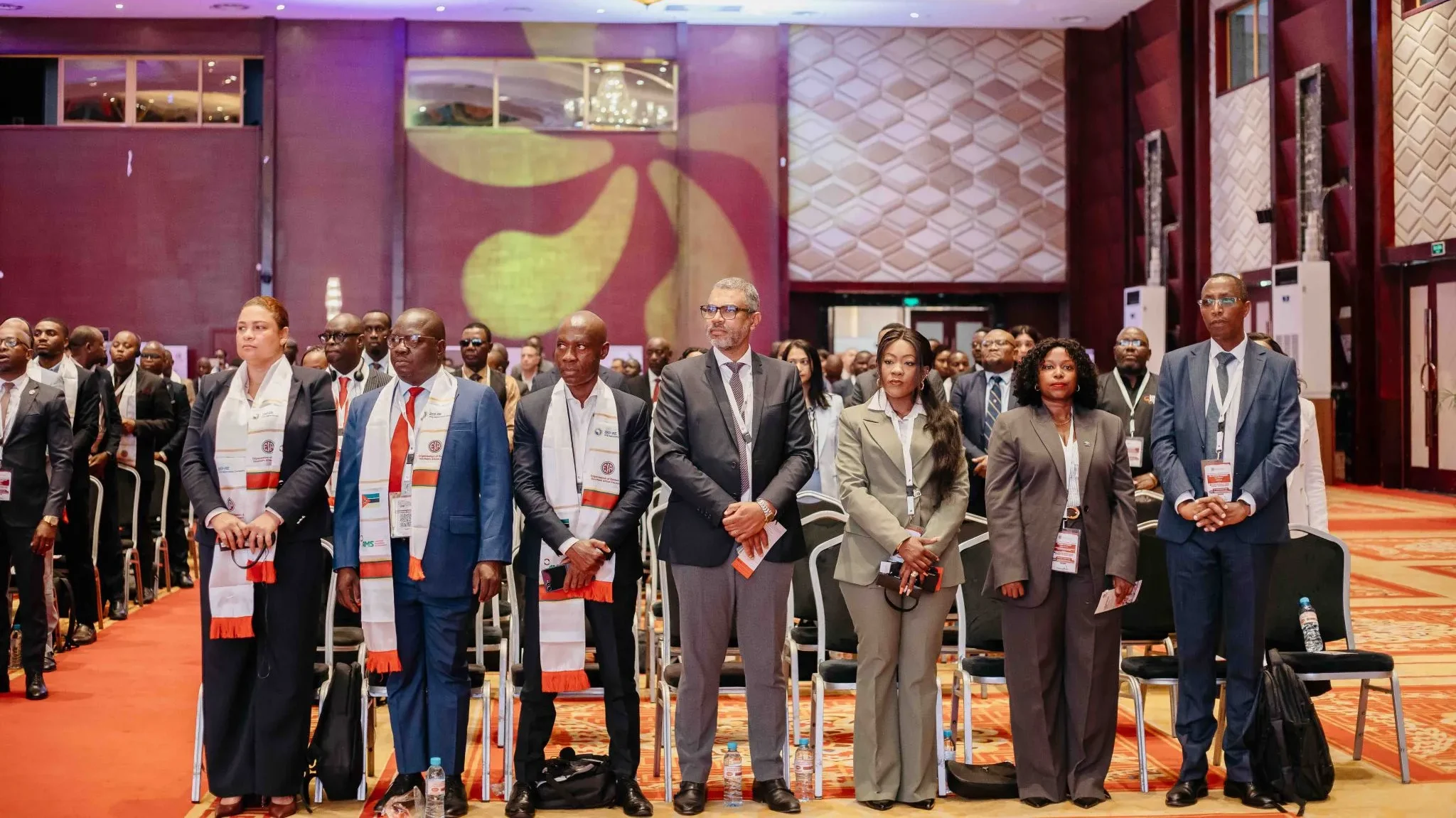
Insurance and reinsurance leaders from across Africa gather in Maputo for the 48th OESAI Annual Conference and AGM.
The breadth of participation reflects how interconnected Africa’s insurance market has become.
The official attendee register includes representatives from Africa Re, ZEP-RE, Kenya Re, East Africa Re, Ghana Re, Continental Re, Hollard, Munich Re, Swiss Re, Aon, Howden, SanlamAllianz and a wide range of domestic insurers, intermediaries and specialist risk businesses.
A strong Nairobi presence in Maputo
Kenya is particularly well represented at this year’s gathering.
Nairobi-based and Kenya-linked organisations attending include ZEP-RE, Africa Re’s Nairobi Regional Office, East Africa Re, Kenya Re, Acentria, First Reinsurance Brokers, GA Insurance, Zamara and other players spanning insurance, reinsurance, broking, actuarial and advisory services.
ZEP-RE’s registered delegation includes senior executives and specialists covering operations, regional markets, life and microinsurance. East Africa Re is represented across technical business, life insurance, business development, client management and finance, while Acentria’s contingent spans commercial, actuarial and reinsurance functions.
Africa Re also has a notable Nairobi-based presence, with Regional Director Dr Phocas Nyandwi, Senior Manager for Underwriting and Marketing Chaya Ramchurn and Deputy Managing Director and Chief Operating Officer Kiiza Bichetero listed among participants.
GA Insurance is also represented, while Kenya Re, First Re and several other Kenya-linked organisations have sent executives and technical specialists to Maputo.
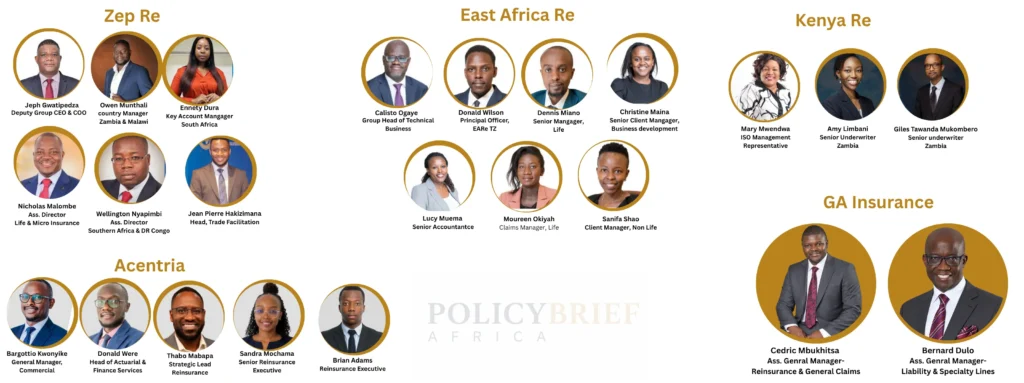
A cross-section of Kenya-linked insurance and reinsurance organisations represented at OESAI 2026 in Maputo.
The scale of the Kenyan contingent points to Nairobi’s growing role as more than a domestic insurance centre. Many professionals based in the city now carry responsibilities spanning East Africa, Southern Africa and the wider continent.
That matters because the risks insurers are increasingly being asked to manage do not fit neatly within national borders.
Climate events can affect multiple countries. Regional trade creates cross-border exposures. Large infrastructure projects require substantial insurance and reinsurance capacity. Specialist risks may require expertise and capital located far from the country in which the original risk arises.
Resilience moves beyond the insurance balance sheet
The conference opened with resilience positioned not simply as an industry issue, but as a wider economic question.
Mozambique’s Prime Minister, Maria Benvinda Levi, addressed delegates during the opening proceedings, as the conference began examining how insurance can contribute to stronger and more sustainable markets.
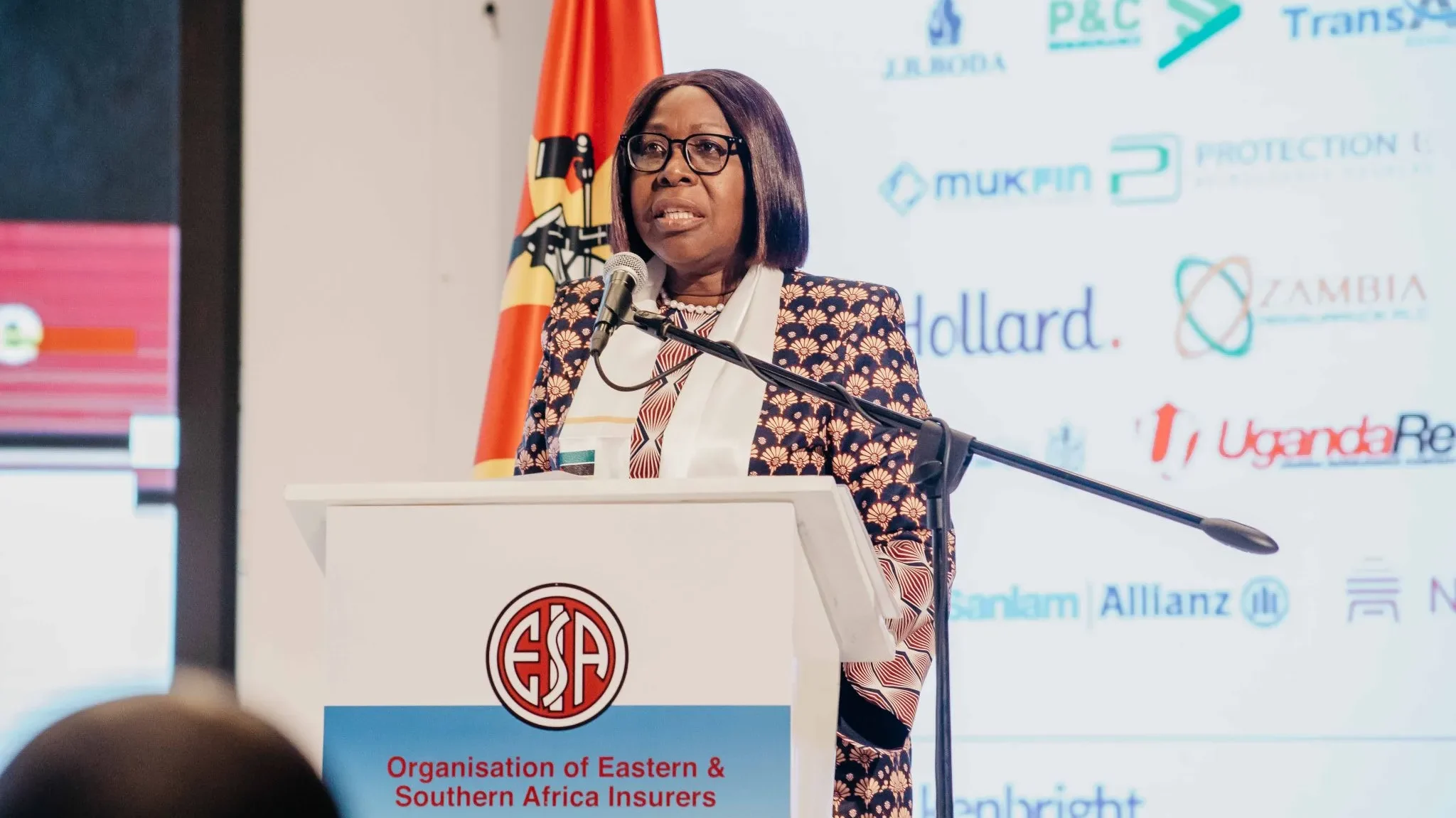
Mozambique Prime Minister Maria Benvinda Levi addresses delegates during the opening of the 48th OESAI Annual Conference in Maputo.
TA recurring message in the conference discussions has been that insurance does more than compensate losses.
When businesses can transfer major risks, they are better positioned to invest. When infrastructure is adequately protected, investors and lenders gain greater certainty. When households and businesses can recover following shocks, economic disruption is reduced.
Insurers also manage pools of long-term capital, creating a second potential role for the sector as African economies search for financing for infrastructure and sustainable development.
The conference programme has therefore connected resilience with questions of capital mobilisation, sustainability and financial inclusion.
Climate risk becomes economic risk
Climate has also moved firmly into the centre of the conversation.
One presentation shown to delegates captured the relationship with a simple statement:
“The economy does not operate outside nature. It operates within it.”
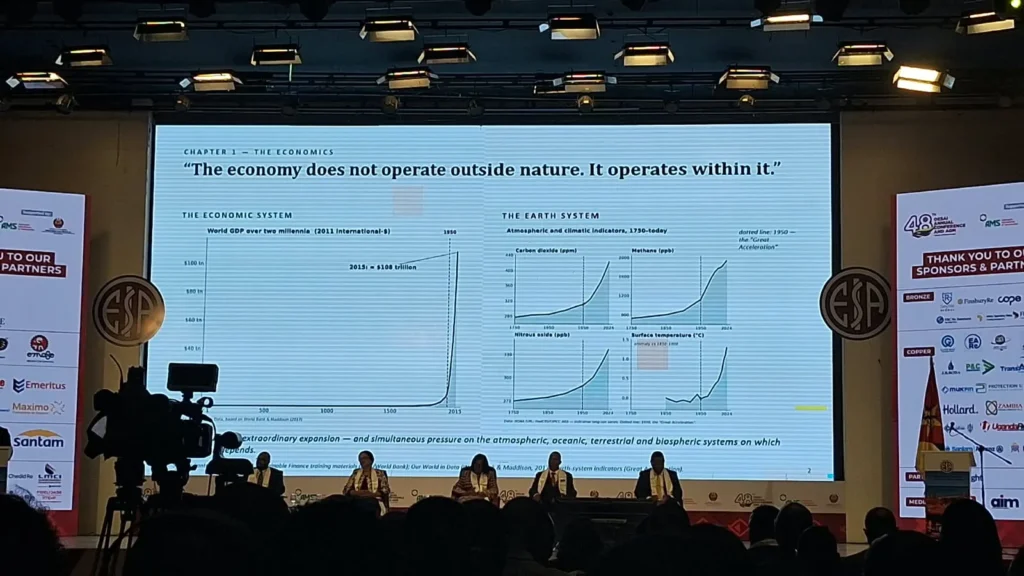
A presentation at OESAI 2026 highlights the increasingly close relationship between economic growth and environmental risk.
For African economies, the connection is immediate.
A flood can damage homes, roads, factories and other infrastructure. Drought can affect agricultural production, household income and credit performance. Severe weather events can create simultaneous pressure on businesses, insurers and public finances.
The insurance debate is therefore increasingly shifting from simply compensating losses after an event to understanding how risk can be financed and distributed before a catastrophe occurs.
Technology joins the resilience discussion
Technology is another prominent theme in Maputo.
On Tuesday morning, delegates gathered for a discussion on AI, Big Data, Natural Catastrophes, Nuance and Pan-African Exposure, examining how new analytical capabilities can help insurers understand increasingly complex risks.
The discussion has focused not only on what artificial intelligence can automate, but on whether it can improve the quality of underwriting, claims, capital allocation and customer decisions.
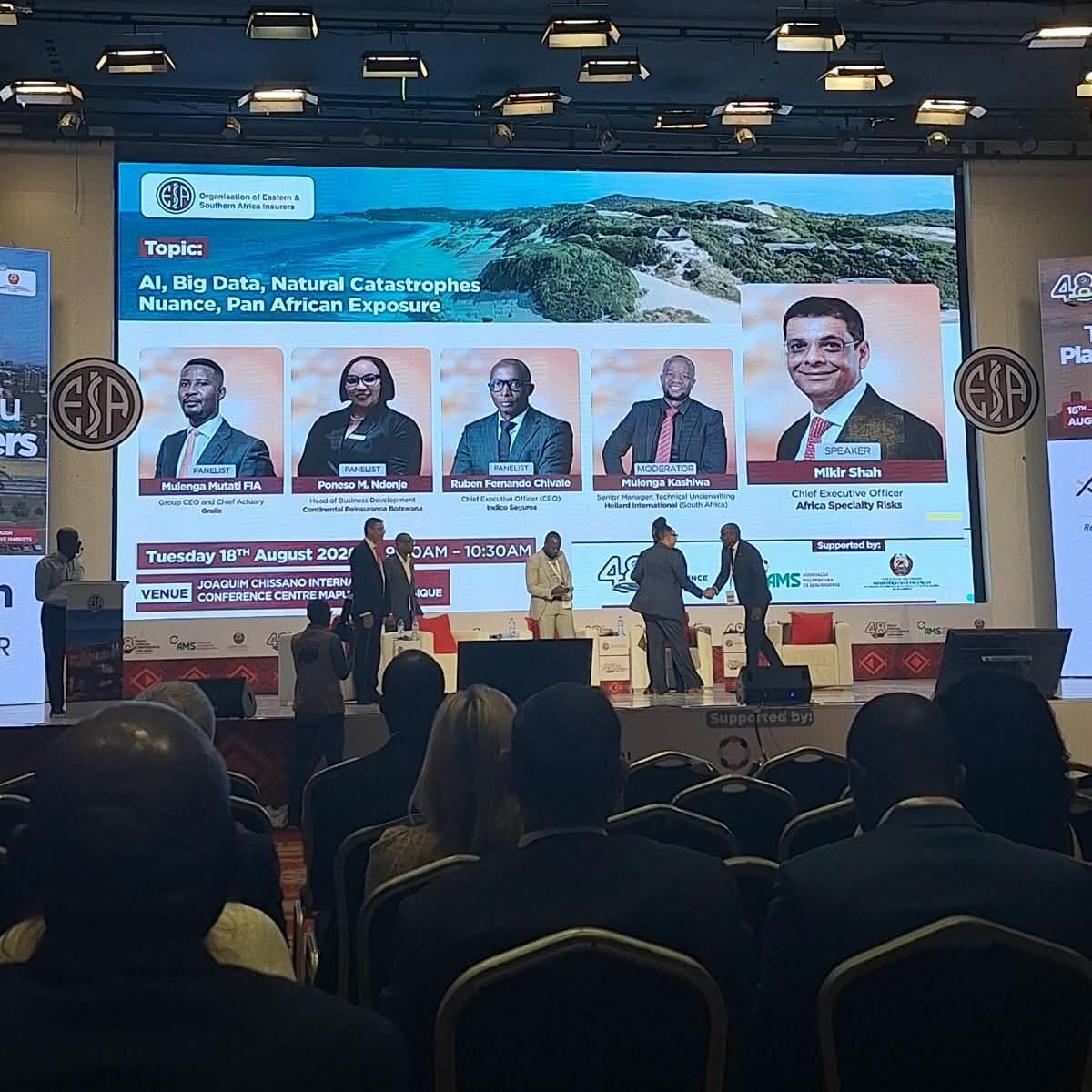
A panel on AI, big data, natural catastrophes and Pan-African exposure underway at OESAI 2026 in Maputo on 18 August.
The subject reflects one of the central challenges facing insurers.
Better data and better models can help identify risk more accurately. But understanding where risk sits is only one part of the equation. Markets must also have sufficient insurance and reinsurance capacity to absorb it.
Ubuntu beyond the conference hall
Not all of OESAI’s important conversations are taking place on stage.
The regional insurance and reinsurance business remains heavily dependent on relationships between insurers, brokers, reinsurers, regulators and other market participants.
That was reflected during Monday evening’s official conference dinner, held under the theme “Ubuntu: Together We Thrive – Celebrating African Unity, Culture and Lasting Partnerships.”
Sponsored by Africa Re, the evening also commemorated the reinsurer’s 50th anniversary.
The programme included welcome remarks from Dr Nyamemba Patrick Tumbo and an address by Dr Phocas Nyandwi, Regional Director of Africa Re’s Nairobi Regional Office, before an Africa Re 50-year anniversary cake-cutting later in the evening.
The occasion reinforced a wider theme running through the gathering: African insurance resilience will depend heavily on the ability of institutions to collaborate across markets.

Delegates connect between sessions at OESAI 2026, where regional partnerships remain a major part of the conference.
A Pan-African market taking shape
The delegate list demonstrates the geographic reach of those relationships.
Alongside participants from Kenya are representatives from Tanzania, Uganda, Rwanda, Zambia, Zimbabwe, Botswana, South Africa, Mozambique, Mauritius, Ghana, Angola and numerous other markets.
There are insurers and reinsurers, but also regulators, brokers, actuarial specialists, technology providers and industry associations.
That mix is important.
No single institution can build a resilient insurance market on its own.
Insurers need capital and capacity. Reinsurers need accurate information about the markets they support. Regulators have to balance innovation with policyholder protection. Technology firms can improve efficiency and distribution. Brokers connect increasingly complex risks with available capacity.
The significance of OESAI lies partly in bringing those pieces of the market into one place.
Who is attending OESAI 2026?
Explore the full delegate register, including insurers, reinsurers, brokers, regulators and other industry participants attending the conference in Maputo.
From discussion to action
OESAI 2026 continues through 20 August, with further discussions expected around climate risk, customer experience and other issues shaping the future of insurance across the continent.
The challenge will be what happens after Maputo.
Resilience will require more than larger insurance premiums or more sophisticated technology. It will depend on better data, deeper insurance and reinsurance capacity, stronger regional relationships and products capable of reaching more African businesses and households.
The gathering in Maputo suggests that the conversation is already moving beyond individual national markets.
Africa’s risks are increasingly interconnected.
Its insurance solutions will have to be as well.